En Español más abajo
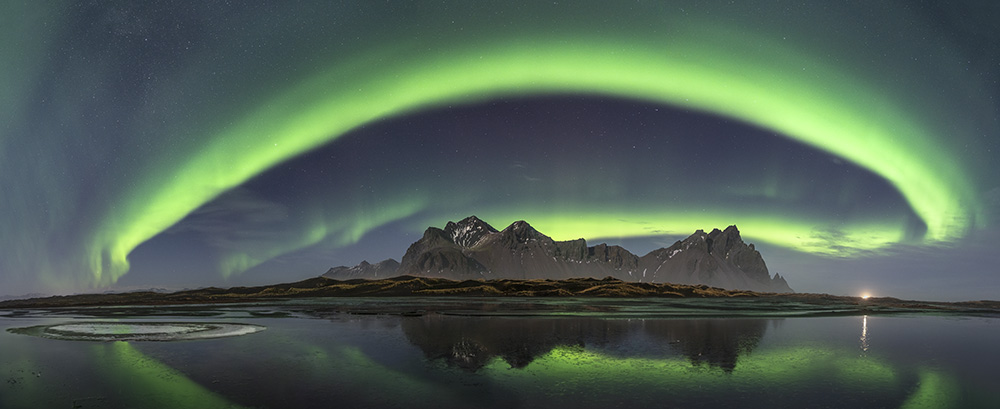
December 9 dawned raining, with overcast skies and the forecast was that the aurora would be quite faint, so nothing boded well for an epic night. However, sometimes perseverance pays off. In the previous days I had extensively scoured the area for novel vantage points. Although I know this peninsula very well, the changing conditions of humidity, temperature and wind can change the terrain and create unexpected opportunities. This is especially important if the location is very popular as is the case here.
As evening approached, the KP index forecast increased and the sky began to clear, revealing the stars, so we grabbed our gear and drove to the small peninsula of Stockknes. We avoided the usual viewpoints that photographers usually use to avoid interference from flashlights and to have more freedom to compose the image without other photographers entering the frame. This is important when you don’t know what intensity, size and shape the aurora will take. I remembered this flooded, half-frozen area would help reflect the landscape, adding to the drama.
Bundled up to resist the intense cold, my wife and partner in crime and I focused our lenses and tried different frames while a small greenish glow began to appear on the horizon. The first moments of the night were disappointing. Unexpectedly, the intensity of the aurora grew rapidly, forming an immense arc that spanned more than 180º. A gigantic and perfect green neon sign illuminated the entire sky. We stood with our mouths open, tiny before the grandiose spectacle. I like to plan my images, so I chose that night knowing that the moon would illuminate the landscape. Both the timing and the location were perfect, but I knew it wouldn’t last. I had to act quickly. I’ve been photographing auroras for years and had seen arcs, but none this perfect. I knew that if I wanted to make a panorama, I would have to use a fairly fast speed, so that the movement of the arc would not prevent me from composing a panorama and the stars would appear as dots. I opened the aperture of the 14mm wide open and took several shots on my level tripod. Then I took another series of shots with the aperture closed to increase the sharpness of the foreground. When I was sure I had succeeded I screamed with joy. When I turned around, I saw my wife laughing as she filmed me. She was as happy as a child opening her Christmas presents.
This image has been recognized as the runner-up for the Aurorae Astronomy Photography of the Year 2025
El 9 de Diciembre amaneció lloviendo, con el cielo cubierto y la previsión era que la aurora sería bastante débil, así que nada presagiaba una noche épica. Sin embargo, a veces, la perseverancia tiene su recompensa. En los días previos había recorrido de forma exhaustiva la zona para buscar puntos de vista novedosos. A pesar de que conozco muy bien esta península, las condiciones cambiantes de humedad, temperatura y viento, pueden hacer cambiar la fisonomía del terrero y crear inesperadas oportunidades. Esto es especialmente importante si la localización es muy popular como es este caso
Al anochecer la previsión de KP índex se fue incrementando y el cielo comenzó a despejarse, dejando ver las estrellas, así que cogimos nuestro equipo y condujimos hasta la pequeña península de Stockknes. Evitamos los miradores habituales que suelen utilizar los fotógrafos para evitar interferencias de linternas y tener una mayor libertad para componer la imagen sin que otro fotógrafos entraran en el encuadre. Esto es importante cuando no sabes que intensidad, tamaño y forma va a adoptar la aurora. Recordé está área inundada y medio helada que ayudaría a reflejar el paisaje, aportando un mayor dramatismo.
Abrigados para resistir el intenso frío, mi mujer y compañera de aventuras y yo, enfocamos nuestros objetivos y probamos diferentes encuadres mientras en el horizonte se empezaba a distinguir un pequeño brillo verdoso. Los primeros momentos de la noche fueron decepcionantes. De forma inesperada la intensidad de la aurora fue creciendo con rapidez, formando un inmenso arco que abarcaba más de 180º. Un gigantesco y perfecto rótulo de neón verde que iluminaba todo el cielo. Nos quedamos con la boca abierta, diminutos ante el grandioso espectáculo. Me gusta planificar mis imágenes, así que escogí esa noche sabiendo que la Luna iluminaría el paisaje. Tanto el momento como el lugar eran perfectos, pero sabía que no duraría. Tenía que actuar con rapidez. Llevo años fotografiando auroras y había visto arcos, pero ninguno tan perfecto. Sabía que si quería hacer una panorámica, tendría que utilizar una velocidad bastante rápida, para que el movimiento del arco no impidiese componer una panorámica y que las estrellas apareciesen como puntos. Abrí completamente el diafragma del 14mm y realicé varios disparos sobre mi trípode nivelado. Luego volví a realizar otra serie con el diafragma más cerrado para incrementar la nitidez del primer plano. Cuando me aseguré que lo había conseguido grité de alegría. Cuando me dí la vuelta, vi a mi mujer riéndose mientras me grababa. Estaba feliz como un niño abriendo sus regalos de Navidad.
Esta imagen ha sido reconocida como segundo clasificado de la Aurorae Astronomy Photography of the Year 2025